Signs your flat roof needs coating or repair in Downtown Bryan
Ponding water, blisters, and seam splits are the three earliest signs a Downtown Bryan flat roof needs coating or repair. Here is how to tell which one you need.
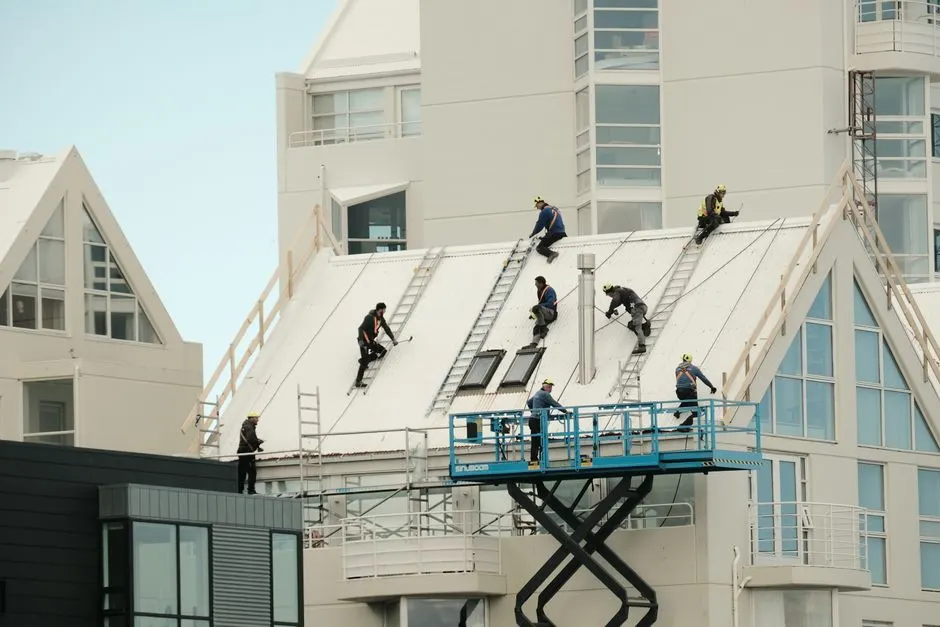
If water is still sitting on your flat roof 48 hours after the last rain, or you can see blisters, wrinkles, or open seams on the membrane, your roof needs coating or repair now. Those three signs, ponding water, blistering, and seam separation, are the earliest and most reliable indicators that a Downtown Bryan flat roof has moved past normal wear. Left alone through one more Texas summer, each one turns into a soaked deck, a stained ceiling tile, and a repair bill three to five times larger.
Downtown Bryan flat roofs take a specific beating. Between the 95°F July afternoons, the spring hail that rolls up Highway 6, and the historic brick buildings along Main Street that trap heat and hold moisture, a flat membrane here ages faster than the same roof would in a milder climate. This post walks through the signs in the order we actually find them, explains when a coating saves the roof versus when it needs real repair, and gives you 2026 pricing so you can plan instead of guess.
What flat roof warning signs look like in Downtown Bryan
Signs your flat roof needs coating or repair in Downtown Bryan is the process of reading the membrane, the drainage, and the interior of the building together to decide whether the roof can be resurfaced or has to be opened up. No single sign tells the whole story. A roof with one blister and clean drainage is a coating candidate. A roof with ponding water, soft decking, and a brown ring on the ceiling below is a repair job, and sometimes a partial replacement.
Downtown Bryan has three flat roof profiles we work on constantly. The first is the low-slope commercial roof over the storefronts and offices along Main Street and Bryan Avenue, usually modified bitumen or TPO installed 15 to 25 years ago. The second is the flat section over a downtown bungalow addition or a converted garage apartment, often EPDM that has been patched twice already. The third is the newer TPO roof on the mixed-use buildings going up near the North Main district, where the membrane is young but the seams and penetrations are the weak points.
Each profile fails in a different order, which is why a walk-through matters more than a checklist. We look at the same seven things on every roof, and the combination tells us what to recommend.
How do I know if my flat roof needs coating in Downtown Bryan?
You know your flat roof needs coating in Downtown Bryan when the membrane is intact but the surface has aged, meaning it is chalky, sun-bleached, or showing hairline cracks, and there is no active leak, no soft decking, and no standing water after 48 hours. A coating is a resurfacing product. It restores the waterproof layer on top of a roof that is still structurally sound. It does not fix a roof that is already failing underneath.
Here is the test we run. Walk the roof after a dry 48-hour stretch and check three things.
- Surface condition: run your hand along the membrane. If it leaves a white chalky residue, the top layer has oxidized and a coating will bond well. If the membrane feels greasy or the seams lift when you press them, coating is the wrong call.
- Drainage: any water still pooled more than 1/4 inch deep 48 hours after rain means the roof is not draining. Coating over a pond just traps the problem.
- Decking: walk the field. Spongy spots underfoot mean the sheathing has taken on water and needs to be replaced before anything goes on top.
If all three pass, a coating is the cheapest way to add 10 to 15 years to that roof. If any one fails, you need repair first, and we would rather tell you that on the walk-through than sell you a coating that peels in two summers. Our team handles both sides of that call, which is why we run every flat roof through a proper Roof Inspection Bryan TX before quoting anything.
The seven signs we find on almost every Downtown Bryan flat roof
These are the seven signs we document on Downtown Bryan flat roofs, in the order they usually appear. If you see two or more, get the roof looked at this season.
1. Ponding water that lasts more than 48 hours
Ponding is the number one killer of flat roofs in this climate. A roof that holds water for two days after rain is holding it long enough for the membrane to absorb moisture and for the seams to start working loose. On downtown buildings with parapet walls, we often find the drains clogged with live oak leaves and grit, which is a $200 fix that prevents a $6,000 repair.
2. Blisters and bubbles in the membrane
A blister is a pocket of trapped moisture or gas between the membrane layers. Press one and it feels like a bubble under a sticker. Blisters grow in the summer heat, and when they pop, you have an open roof. On a Downtown Bryan roof in July, a blister the size of a dinner plate can double in size in three weeks.
3. Open or lifting seams
Seams are where flat roofs fail first. On modified bitumen, look for the granulated cap sheet curling at the edge. On TPO and EPDM, look for seams that have turned dark or feel loose when you press them. A single open seam on a 40-foot run can let in enough water to soak a 10-foot section of insulation.
4. Cracks, alligatoring, and surface oxidation
When a flat roof turns from black or gray to a chalky white, the top layer has oxidized. That is the point where a coating is still cheap. Once the surface alligators into a cracked pattern, the membrane is losing its elasticity and a coating is a short-term patch at best.
5. Interior water stains and ceiling rings
A brown ring on a ceiling tile or a stain spreading on a joist is the roof telling you it has been leaking for weeks, sometimes months. Flat roofs leak slowly. Water travels along the deck before it finds a gap, so the stain is often 10 to 20 feet from the actual breach.
6. Rusted fasteners, vents, and flashing
Every penetration on a flat roof, the HVAC curbs, the vents, the plumbing stacks, the parapet flashing, is a potential leak point. Rusted fasteners and cracked sealant around those penetrations are the second most common source of leaks we find downtown after seam failure.
7. Soft or spongy decking
If the roof feels soft underfoot, the sheathing has absorbed water and is losing structural strength. This is the sign that moves a job from coating to repair. Soft decking has to be cut out and replaced before any new surface goes down.
If you are seeing any of these on a commercial building, our Flat Roof Repair Bryan TX team handles the full scope, from cutting out wet insulation to re-seaming and re-flashing the penetrations.
Coating or repair: which one does your roof actually need?
Coating and repair solve two different problems. Coating buys time on a roof that is structurally sound but has an aged surface. Repair fixes a specific failure, a leak, a split seam, a torn membrane, a bad flashing detail. If your roof has an active leak, coating alone will not stop it, and if your roof is sound but chalky, a repair crew has nothing to repair.
Here is how we decide, in plain terms.
- Coating makes sense when: the membrane is intact, the roof drains within 48 hours, the decking is firm, and the roof is between 8 and 20 years old. A silicone or acrylic coating on a prepared surface adds 10 to 15 years of service.
- Repair makes sense when: there is one or two localized failures, a seam, a flashing detail, a puncture, and the rest of the roof is in good shape. We cut out the failed section, replace the insulation if it is wet, and re-seam the membrane.
- Replacement makes sense when: more than 25% of the roof shows wet insulation, the decking is soft across multiple bays, or the roof has been patched three or more times in five years. At that point, coating and repair are throwing money at a roof that is done.
We see a lot of downtown property owners try to coat a roof that needed repair, and it always fails within two summers. The coating peels off the wet spots first, and you are back where you started, minus the coating cost. If you are not sure which side of the line your roof is on, our Roof Coating Bryan TX crew will tell you straight on the walk-through.
What flat roof coating costs in Downtown Bryan in 2026
Flat roof coating in Downtown Bryan runs $2.50 to $5.50 per square foot in 2026, installed, depending on the coating system and how much prep the roof needs. A 2,000-square-foot commercial flat roof, which is a typical downtown storefront footprint, lands between $5,000 and $11,000 for a full silicone coating with seam reinforcement and flashing detail work.
The variables that move the number:
- Coating type: acrylic is the cheapest at $2.50 to $3.50 per square foot, silicone is $3.50 to $5.50 and lasts longer in Texas UV, and polyurethane sits in between.
- Prep work: pressure washing, seam repair, and rust treatment add $0.50 to $1.50 per square foot. A roof that has never been coated needs more prep than one that was coated eight years ago.
- Ponding correction: if we have to add tapered insulation or a new drain to fix ponding, that is a separate repair line, usually $1,500 to $4,000.
- Access: downtown buildings with limited alley access or neighboring structures close to the roofline can add 10% to 20% to labor.
Flat roof repair, by comparison, runs $450 to $1,200 for a single localized leak, and $2,500 to $6,000 for a section repair that involves cutting out wet insulation and re-decking. A full flat roof replacement on a downtown commercial building runs $8 to $14 per square foot in 2026.
If you own a commercial building and want the full picture on coating systems, our Roof Waterproofing Bryan TX page covers the products we install and how they hold up to Central Texas heat.
Common mistakes we see Downtown Bryan property owners make
The most expensive flat roof mistakes are the ones that look like savings up front. We have walked hundreds of downtown roofs, and the same four errors show up over and over.
- Coating over ponding water. The coating bonds to the water, not the membrane, and peels within a year. Fix the drainage first.
- Patching a blister instead of cutting it out. A patch on top of a blister traps the moisture that caused it. The blister comes back bigger.
- Ignoring the interior stain because it stopped spreading. A stain that stops spreading in dry weather means the leak is still there, waiting for the next rain. It has not healed.
- Hiring the cheapest quote without a roof walk-through. A flat roof quote without an on-roof inspection is a guess. We see bids that miss the wet insulation entirely, and the owner pays twice.
One more thing we tell every downtown property owner: keep the drains clear. A $150 drain cleaning each spring and fall prevents the majority of ponding-related repairs we do. If you are not comfortable on the roof, our Roof Maintenance Bryan TX program includes drain clearing and seam inspection twice a year.
When to call a professional
Call a professional when you see two or more of the seven signs, when water is entering the building, or when the roof is over 15 years old and has never been inspected. Flat roofs are not a good DIY project. The membrane is easy to damage, the leak source is rarely where the stain is, and one wrong cut can turn a $900 repair into a $6,000 section replacement.
Our team at Bryan Roof Repair Experts walks every flat roof before quoting, documents what we find with photos, and tells you whether coating, repair, or replacement is the right call for your building. We work on downtown storefronts, offices, bungalow additions, and mixed-use buildings across the Bryan area, and we know how these roofs age in this specific climate.
If you are not sure what you are looking at, start with a Roof Leak Repair Bryan TX call so we can trace the water to its actual source before anyone talks about coating.
Frequently Asked Questions
How do I know if my flat roof needs coating in Downtown Bryan?
If the membrane is chalky or sun-bleached, the roof drains within 48 hours, and the decking is firm, it is a coating candidate. If you see ponding, soft spots, or an active leak, it needs repair first. A walk-through takes about 30 minutes and settles it.
What are signs of flat roof damage in Downtown Bryan TX?
The seven we check are ponding water past 48 hours, blisters, open seams, alligator cracking, interior ceiling stains, rusted fasteners and flashing, and soft decking. Two or more of those means the roof needs professional attention this season.
Is flat roof coating worth it in Downtown Bryan?
Yes, when the roof is structurally sound. A $2.50 to $5.50 per square foot coating adds 10 to 15 years of service, versus $8 to $14 per square foot for a full replacement. On a sound roof, coating is the best value in flat roofing.
Who repairs flat roofs in Downtown Bryan TX?
Bryan Roof Repair Experts repairs and coats flat roofs across Downtown Bryan, from Main Street storefronts to bungalow additions. We handle TPO, EPDM, and modified bitumen, and we walk every roof before quoting.
How long does a flat roof coating last in Central Texas?
A silicone coating lasts 12 to 15 years in this climate, acrylic 8 to 10. Texas UV is hard on acrylic, so we usually recommend silicone on downtown commercial roofs where the coating has to survive full summer sun.
Get help with Roof Repair in Bryan
If your Downtown Bryan flat roof is showing any of the signs above, we will get up there, find the real problem, and tell you whether coating or repair is the right move. Call Bryan Roof Repair Experts at (979) 316 9392 and we will schedule a walk-through this week.